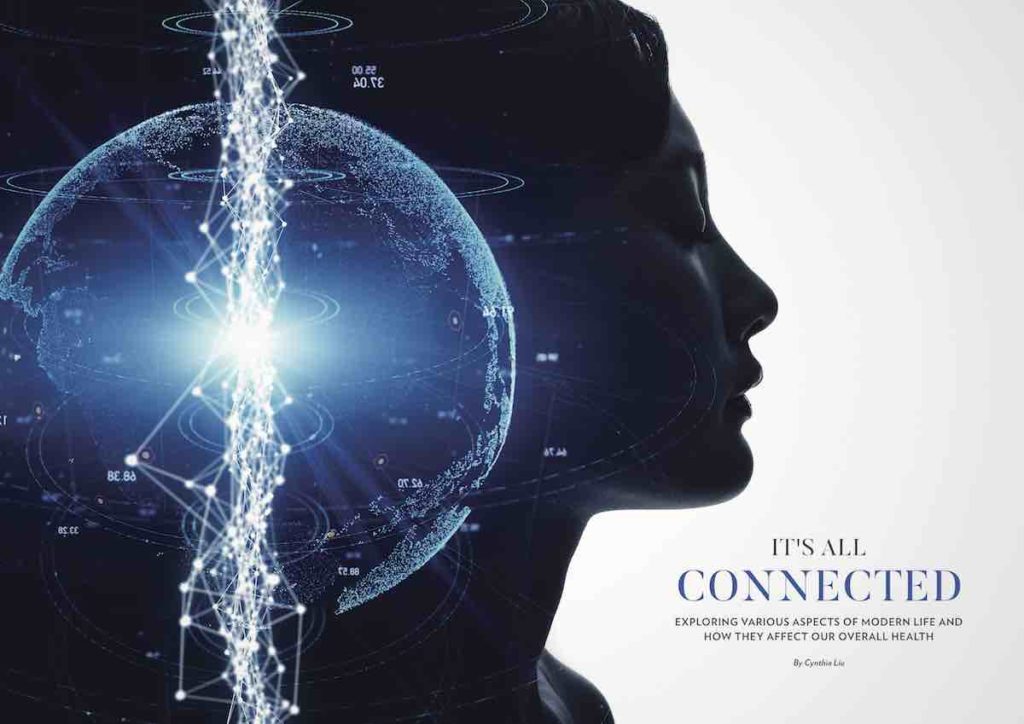
The Benefits of Sunlight: Whole Light in a Processed World
How modern life disrupted one of the body’s most important biological signals

Civilization revolved around the sun
The sun is life.
Literally. Not metaphorically.
Plants convert sunlight into energy through photosynthesis. Animals eat plants or eat other animals that ate plants. Humans, even with our sophisticated technology, are downstream of the same solar chain.
Ancient civilizations understood this. The Egyptians worshipped Ra, the almighty sun god and creator of the universe. The Aztecs organized rituals and sacrifices around the movement of the sun. In India, sunrise routines that can include prayer, sun gazing, and Surya Namaskar—sun salutations—reflect the sun’s significance in daily life and spiritual practice.
Ancient cultures worshipped the sun not because they were primitive, but because they knew something modern people forgot: life rises and falls with light.
Even our language gives us away.
“You are my sunshine.”
“You’re the light of my life.”
We associate light with love, warmth, and vitality. For most of human history, daylight meant action and life, while darkness was associated with uncertainty and vulnerability.
Our modern calendar is based on the 365 days it takes for the earth to circle the sun. Humans woke with the sun and slept after dark because there wasn’t much choice. Work, eating, and festivals all revolved around natural light cycles.
Humans didn’t just structure time around the sun—they built around it too. Traditional architecture worked with sunlight, heat, shade, airflow, and the seasons. South-facing homes in ancient Greece maximized winter light and warmth, while Nordic sod-roofed homes that looked like Hobbit houses helped families survive long dark winters.
Then the Industrial Revolution and electricity disconnected human activity from the sun.
We have now replaced full-spectrum sunlight with LED bulbs, and we live in climate-controlled boxes that barely acknowledge sunrise or sunset. We've turned night into day and day into an optional suggestion.
Modern humans now spend most of their lives under what I think of as "processed light."
And like processed food, processed light has consequences far beyond what we realized.
Sunlight is one of the primary signals that regulates human biology. Mood, hormones, metabolism, immune function, energy, appetite, and sleep are all influenced by light exposure.
We like to imagine ourselves as separate from nature, but every system in the body still responds to sunlight. Humans are solar-powered organisms living in an environment our biology isn't designed to handle.
Our modern relationship with sunlight is abnormal
For most of my life, I had been conditioned to wear sunblock 365 days of the year. Yes, I transitioned from luxury cosmetic brands to dermaceuticals, then to natural versions with just zinc and organic coconut oil. But I never thought to question the premise that sunlight was inherently dangerous until I heard about Dr. Jack Kruse.
During college, I suffered from mild seasonal affective disorder (SAD) and would make it through most of winter until March, when I would break down and sob from the insufferable lack of sunshine—in Northern California. I'm sure that chronic sleep deprivation and eating donuts, ramen, or bagel dogs late at night didn't help either.
Fast forward a couple of decades and I'm teaching lifestyle medicine. I've known for years that sleep is important, but there's just so much I want to do and not enough time to do it all. I tried everything to go to bed earlier, including setting alarms to force myself to go to sleep—I would just turn them off.
One day, I decided to experiment with orange-lens blue-light blocking glasses a few hours before bed. It made me sleepy enough that I actually went to bed early.
Some time later, I went to visit friends in Hawaii. Due to the time difference, I woke up naturally around 5 am, shortly before sunrise. I watched the sunrise from my friends' lanai and savored the stillness of the mornings.
Then I spent most of the day outdoors—hiking, snorkeling, and stand-up paddle boarding (SUP). It was so dark at night, we could see the Milky Way.
By 9 pm, I could barely keep my eyes open.
I felt so good that I decided to take advantage of the jet lag and keep waking up early every day while I was there. I was in rhythm with nature—sunrise, ocean, mountains, starlight, darkness.
Despite teaching in lifestyle medicine that morning sunlight synchronizes circadian rhythms so that people naturally feel sleepy 14 to 16 hours later, I hadn't experienced this firsthand or in such a textbook-perfect way.
I had taken up SUPing the summer before the Hawaii trip. I paddled at least 8 to 10 hours a week for three months until I hurt my elbows. SUPing made me feel euphoric, like I was high. I thought it was from being around water and nature.
After I hurt my elbows, I realized that I didn't even enjoy paddling—I just liked balancing on the board, and it was easier to get up on the board than surfing. In retrospect, SUPing made me feel ecstatic because of the sun. That feeling of being high was likely from the feel-good hormones it triggered. At the same time, I literally felt like a battery being recharged.
My thinking evolved from using the sun for better sleep to seeing it as a circadian anchor to finally understanding how deeply sunlight influences human biology.
Sunlight is biological information
Sunlight is information.
It indicates whether it’s morning or night—time to be active or time to rest. Whether it's summer or winter—a season of abundance or scarcity.
Every organ in the body operates on timing signals. There is a master clock in the brain, but there are also clocks in the liver, gut, muscles, and other organs—constantly responding to environmental cues, especially light.
Light exposure controls countless biological functions like hormone levels, metabolism, body temperature, appetite, immune function, and sleep. Sunlight isn't just about vitamin D. It's one of the main ways the body gathers information about its environment.
What every gardener knows
Put a plant in a dark room and it wilts and dies.
Put vegetables under Alaska’s 17+ hours of summer daylight and they become freakishly gigantic.

Humans think we're exempt from light biology.
Yet deprive us of sunlight and instead of drooping leaves, we develop fatigue, insomnia, depression, metabolic dysfunction, and chronic disease.
Plants capture sunlight and convert that energy into food. Humans consume that stored sunlight and convert it into heat and infrared light, almost like a biological mirror of photosynthesis.
Human biology changed with latitude
Humans adapted to their environments over thousands of years—different sunlight, different food availability, different climates. Darker skin near the equator. Lighter skin at latitudes farther from it.
Even our relationship with milk may reflect this. Many people closer to the equator become lactose intolerant after childhood, while populations farther from the equator have no issues with dairy. Some researchers believe less sunlight and lighter skin at higher latitudes may have influenced adaptations that allowed people to digest dairy to help meet their vitamin D needs.
Human biology evolved under natural sunlight. Then we invented a completely different light environment.
How the body tells time
Specialized cells in the eyes detect specific wavelengths of morning light and send that information to the brain, which contains the body's master clock. From there, timing signals cascade.
Morning sunlight is one of the most important cues for keeping all of the clocks synchronized. Light hitting the retina triggers the cortisol awakening response. Later, darkness signals melatonin release.
Melatonin is best known for regulating sleep, but it also influences many other biological processes, including cellular repair and cancer risk.
Blue light makes up about a third of natural sunlight. It increases in intensity throughout the morning and peaks around noon. Blue-rich morning sunlight hitting specialized retinal cells says: wake up, suppress melatonin, elevate cortisol, and increase alertness. Even some blind individuals receive circadian light signals despite having no conscious vision.
Blue light helps set the body's clock in the morning, but the same information delivered late at night can push timekeeping in the wrong direction. Jet lag is what happens when biological timing temporarily falls out of sync after crossing several time zones.
But many people jetlag themselves every week. Staying up late and sleeping in on weekends, then trying to switch back on Monday is called social jet lag. Even if the total hours of sleep add up to 8 hours or more, the organ systems are still out of sync. We're not ATM machines that let us pay back sleep debt later.
Full-spectrum sunlight vs "processed sunshine"
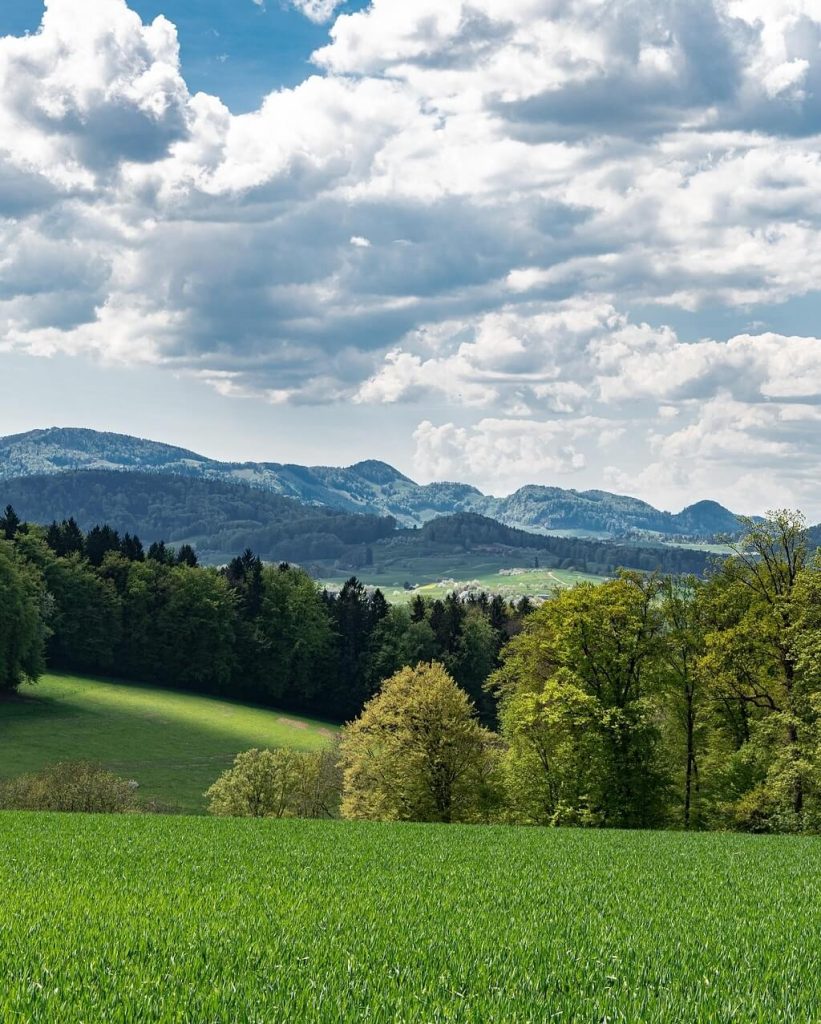

We processed light the same way we processed food.
We processed food, then wondered why metabolism broke down.
We processed light, then wondered why sleep, mood, appetite, hormones, and energy became dysregulated.
Full-spectrum sunlight is whole—nature's full rainbow of wavelengths constantly changing throughout the day in both intensity and color. Processed light, such as modern artificial lighting, isolates only a section of wavelengths and, like machinery, operates with the same intensity and color whether it's day or night.
Domesticated house humans
Nowadays, many humans live a sedentary indoor existence—much like their pets, which tend to also be overweight.
Our offices are artificial HVAC climate-controlled environments with windows that can't be opened for fresh air and sunlight. Modern windows filter natural sunlight, altering the spectrum of light that reaches us indoors.
Incentives to filter sunlight include cutting out some of the heat from infrared radiation and blocking UV rays that can damage skin and fade upholstery. But as is often the case, humans' belief that they can control nature and recreate it has unintended consequences.
Sunlight at midnight
Blue light isn't inherently bad. The problem is that modern humans bombard themselves with daytime signals whether it's dawn, dusk, or midnight.
LED lightbulbs, TVs, smartphones, computers, grocery stores, gyms, airports—we surround ourselves with light that mimics noon even when it's night.
At 11 PM, many people blast their retinas with artificial sunlight while binge-watching Netflix, scrolling through Instagram, or playing video games. Then they wonder why they're exhausted yet wired at the same time.
Screens and LED flicker also play a role. Unlike sunlight or the softer, more continuous flicker of incandescent bulbs, many LEDs rapidly flash on and off hundreds or even thousands of times per second. Though the eye may not consciously see this strobe light effect, the nervous system still registers it. Some people experience this as eye strain, headaches, agitation, or overstimulation.
Daylight Computer uses a paper-like display without the blue-light backlighting, glare, and flicker typical of most modern screens. The fact that a display that reads like paper is now a selling point says a lot about how unnatural screens have become.
This isn't just about wavelength. Timing matters. Brightness matters. Duration matters. The cumulative effect matters.
Most humans now spend very little time outdoors receiving full-spectrum sunlight during the day. Meanwhile, we're receiving enormous amounts of artificial light at night. This confuses human biology about when daytime starts and when nighttime begins.
Even professional sports have become circadian disruptors. Football and soccer games played under stadium floodlights at night are biological nightmares, especially for away teams from different time zones. Adrenaline surges and cortisol spikes are incompatible with night, when the body is normally winding down to rest. Peak athletic performance clashes with the muscles' circadian clocks.
Orange and red-tinted blue-light blocking glasses for sleep can reduce the melatonin disruption caused by blue light at night. The lenses need to block the correct range of wavelengths and be verified by legitimate third-party lab testing.
There are clear-lens computer blue-light glasses that are often advertised with blue flashlight demos to prove that they filter blue light. In reality, many block only the narrow range of blue wavelengths used in the demo flashlight and don't do much to affect sleep.
Blue-light blocking glasses are still ultimately a workaround. Humans engineer elaborate solutions—creating processed solutions to processed problems—so they can continue overriding basic biological rhythms instead of simply going to sleep.
The war on sunlight
Modern humans fear sunlight while voluntarily living under artificial light that's out of sync with our circadian clocks.
We've been taught that ultraviolet (UV) light from sunlight causes skin cancer.
Where did this idea come from? We isolated UV light from the rest of the solar spectrum, blasted skin with processed sunshine under laboratory conditions, found that excessive UV exposure increases skin cancer risk, then assumed that sunlight must too.
If melanoma were simply a matter of total sun exposure, outdoor workers should have higher rates of melanoma than office workers. But they don't always. This phenomenon is known as the outdoor worker paradox.
The pattern of exposure may help explain this paradox: outdoor workers receive sunlight consistently and tan gradually. Office workers spend most of their lives indoors under artificial light, then binge on sunlight on weekends or vacations—and their pasty, unprepped skin burns.
Sunlight is perceived as so dangerous that there are proposed geoengineering projects to spray particles into the atmosphere to reduce the amount of sunlight reaching Earth.
Humans repeatedly assume nature is a machine that can be disassembled, manipulated, and reconstructed without unintended consequences.
Sound familiar?
We processed food into isolated nutrients, seed oils, and synthetic supplements, then were surprised when metabolism broke down. Now we use processed artificial light isolated from the rest of the solar spectrum and treat it as if it were the same as natural, whole sunlight.
Nature doesn't deliver UV light by itself any more than it grows high-fructose corn syrup on trees.
The absence of night
Humans evolved under dark nights.
Not dim nights. Not LED apartment nights. Not falling-asleep-to-TV-nights.
Actual darkness.
Today we treat night as an inconvenience. Artificial lighting, 24-hour commerce, shift work, and constant connectivity all come from the premise that darkness is something to overcome.
True darkness has become rare.
City lights don't sleep. Streetlights shine through bedroom windows. Routers blink. Smoke detectors blink. Alarm clocks glow. Phones light up at all hours. Many people now sleep in permanent artificial twilight every night of their lives.
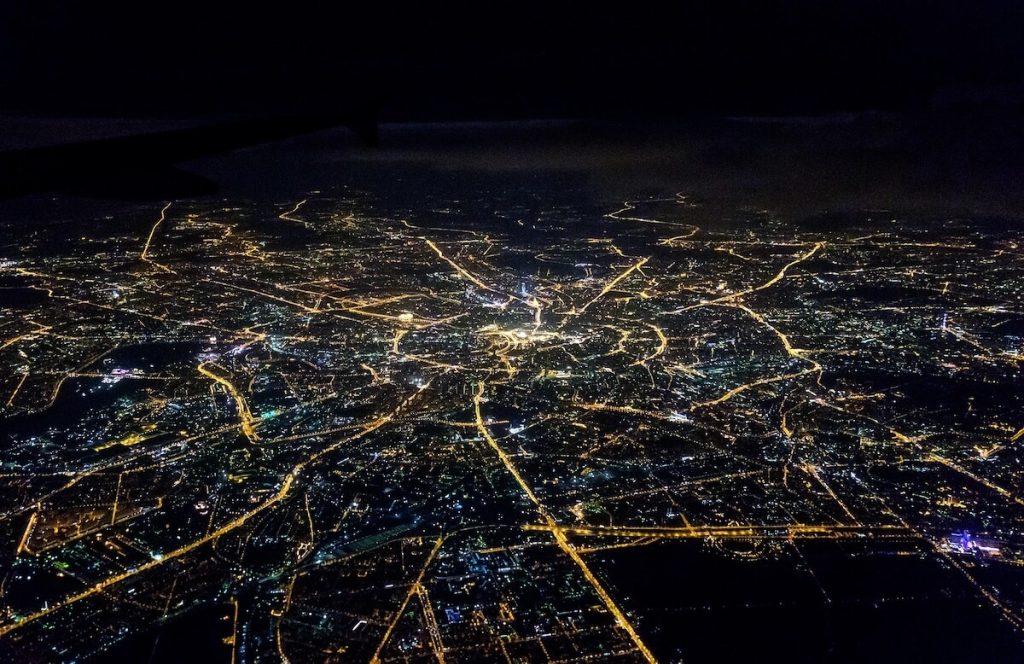
The issue isn't just more blue light at night. It's more light at night in general. Brighter nights. Constant illumination. Humans have extended daytime far beyond what biology evolved to handle.
Darkness isn't merely the absence of light. Darkness is a biological signal. It's associated with sleep, melatonin production, and rest and repair.
For most of human history, nighttime meant darkness with occasional moonlight, stars, or firelight. Under truly dark skies untouched by urban light pollution, humans can see the Milky Way stretching across the night sky. Most modern humans rarely experience this anymore.
Shift workers provide real-world examples of what happens when circadian timing breaks down chronically. Nurses, night-shift employees, pilots, and emergency responders consistently have higher rates of obesity, metabolic disease, mood disorders, and certain cancers. In fact, the World Health Organization's cancer research agency has classified night-shift work as probably carcinogenic to humans. Humans weren't built for permanent jet lag.
Yes, the wrong amount of blue light at the wrong time of day is trouble. But it's not just wavelength. The bigger problem is that modern civilization refuses to allow night to exist anymore.
No sunsets, no firelight
Humans evolved with changing light throughout the day: bright white daytime sunlight, warm golden-hour light, then darkness lit by moonlight or fire.
Night is dim light and warm light: reds, oranges, and yellows like candlelight.
Red light is a cue for relaxation and winding down for sleep.
Modern indoor lighting often does the opposite.
The U.S. phaseout of incandescent lightbulbs is effectively a ban for most consumers. This may be more short-sighted (pun intended) than lawmakers realize. Incandescent bulbs have been criticized for wasting energy as heat. But that heat comes largely from the red and infrared wavelengths that humans have lived with for thousands of years through sunlight and firelight.
The sun is free. Yet biohackers buy expensive red-light panels to recreate wavelengths missing from modern indoor life. Humans keep engineering artificial solutions to compensate for artificial environments. Not surprisingly, many of these solutions create unintended consequences, like electromagnetic fields (EMFs).
Intelligence agencies and the mafia both figured out that controlling light is a powerful way to manipulate human behavior. Casinos, for example, understand something modern office buildings accidentally replicate—humans lose track of time without natural light cues.
Casinos are designed to disconnect people from natural light and time signals. No windows. No sunsets. No sense of morning or night. Bright lights that never change.
When biological rhythms blur, humans become easier to keep awake, overstimulated, craving the dopamine hit that comes from not knowing the outcome of the next roll of the dice. Judgement gets even further impaired when you add alcohol into the mix.
Screens don't instantly destroy health. Artificial light isn't automatically poison. The problem is spending years under conditions that humans never evolved for: minimal morning sunlight, indoor work, bright nights, blue-lit screens, time-zone travel, and poor sleep.
The focus on vitamin D
When most people think about sunlight and health, they think about vitamin D.
That makes sense. Vitamin D is one of the few measurable effects of sunlight. What could be measured became easier to study and easier to standardize. We can test for it. We can track it.
But just because something can be measured doesn't mean it's what really matters.
Vitamin D prevents rickets and other deficiency diseases. Yet low levels of the vitamin show up again and again across a wide range of medical problems. So if low vitamin D is the problem, then raising vitamin D should be the solution.
But does vitamin D deficiency cause these problems or does it just happen to appear with them?
We've become so focused on vitamin D that we haven't been paying attention to the importance of where it comes from.
Making vitamin D is only one of the many ways that sunlight influences human biology. The sun also influences a range of functions, from circadian rhythms to metabolism.
It's like processed food—you can add a few isolated vitamins and prevent certain deficiencies, but your body isn't going to be fooled that eating fortified processed foods is the same as eating whole foods.
A vitamin D supplement can raise vitamin D levels, but it doesn't replace sunlight. A supplement can't provide circadian timing cues.
Reducing sunlight to just a vitamin D delivery system overlooks how crucial the sun is to life itself.
Low vitamin D may be less of a root cause of poor health and more of a biomarker of inadequate sunlight exposure.
The sunlight RX: returning to natural rhythms
We've spent the last century trying to improve health by isolating variables. A nutrient becomes a supplement. Movement becomes exercise. Sunlight becomes vitamin D.
Nature provides packages. We isolate components.
Sometimes this can cause us to mistake an outcome for the thing that produced it. Sunlight is a good example. Most discussions focus on vitamin D levels, sunscreen, skin cancer risk, and sleep quality. All of these matter.
But they sit downstream of a more fundamental reality: humans evolved outdoors, under a sky that changed by the hour, by the season, and by latitude.
Today many of us spend our days indoors under artificial light—especially after sunset—then wonder why sleep, metabolism, hormones, and overall health are impaired.
The solution isn't to perfectly replicate every variable our ancestors experienced. That's impossible.
The solution is to stop living as though those variables don't matter and move closer to the light environment that was our species' default for nearly all of our existence.
Get outside early in the day, ideally at sunrise. Light filtered through a window isn't the same as direct sunlight. Let your eyes and skin experience natural morning light to help set your circadian clock so hormones are released at the right times and in the right amounts. Make sunlight, not screens or artificial lighting, the first light you see each morning. Even on cloudy or rainy days, outdoor light can be 10 to 20 times brighter than the brightest indoor lighting.
Eat breakfast in daylight. Exercise outdoors. Spend more time under open skies than modern life considers necessary.
Allow your skin to gradually adapt to regular sunlight exposure. Then spend some time outdoors later in the day as well, when vitamin D can be produced.
Watch the sunset.
And when night arrives, let it arrive. Dim the lights. Reduce bright screens. Trade some artificial light for darkness, firelight, moonlight, and starlight.
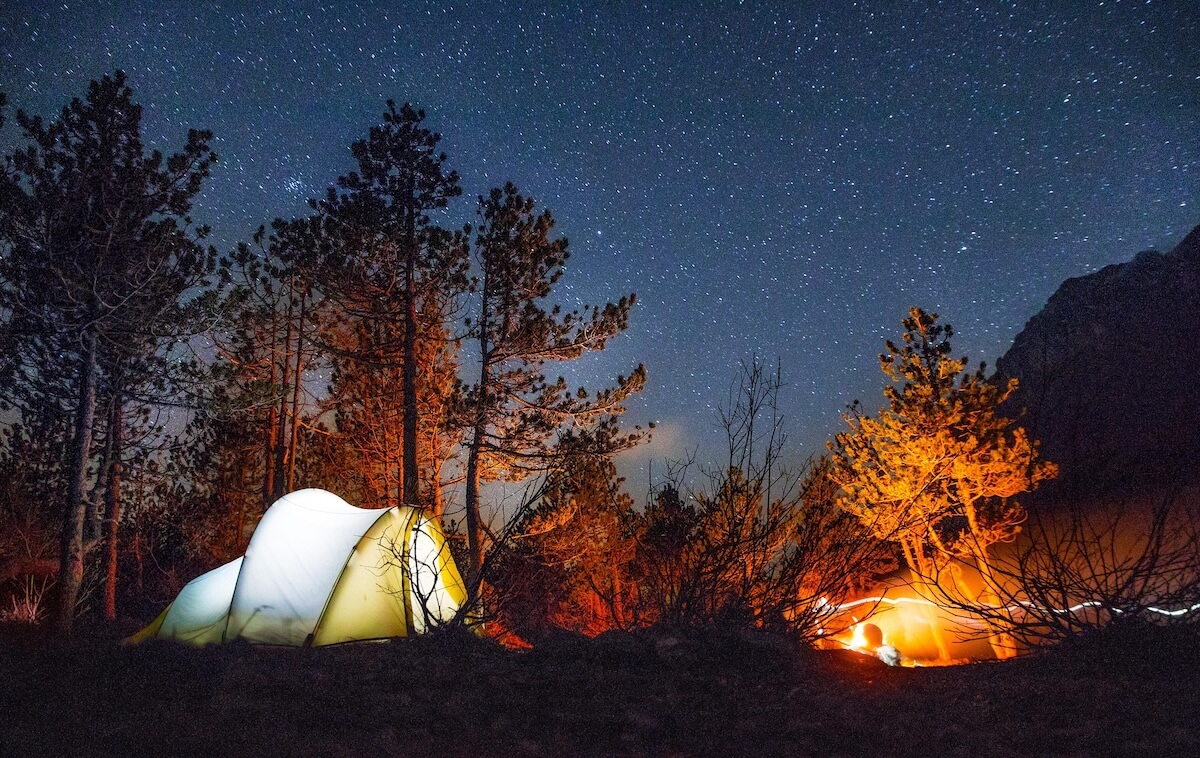
Live with the seasons, too. Winter isn't a defective version of summer.
The goal isn't to hack better sleep. Or higher testosterone. Or lower cortisol. Or a perfect vitamin D score. Those are downstream signs that the body is functioning the way it was designed to.
Sunrise. Sunlight. Sunset. Firelight. Darkness.
We processed light the same way we processed food.
For most of human history, we consumed the whole thing.
Then we moved indoors and started living on processed sunshine.
How much of your day is spent in processed light?