
Life Lessons Through Travel: How Travel Transforms You

When traveling internationally, the world is your classroom. Foreign languages, anthropology, politics, and history are just a few subjects you can learn from travel. All these new stimuli exercise your brain, helping keep your mind sharp.
Less obvious, yet more far-reaching, are life lessons through travel—how travel transforms us emotionally and spiritually. Travel broadens your perspectives and promotes personal growth.
The world Is the classroom
Real life is the ultimate language lab
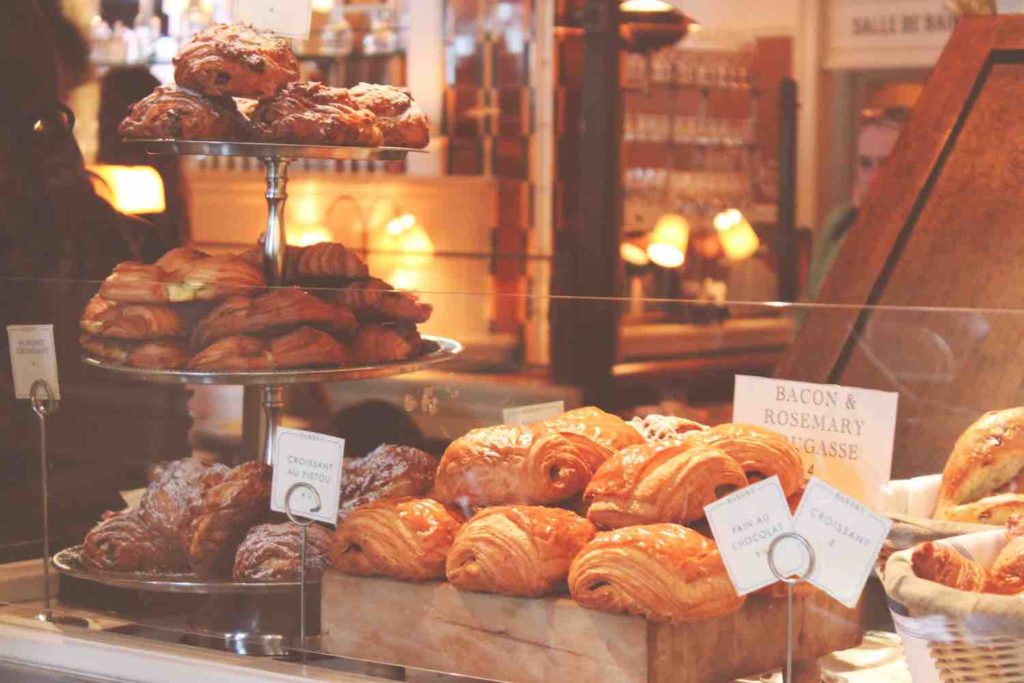
There are many ways to study a language. Travel offers something most of them don't: immersion. If you have the chance to travel, isn’t it more fun to learn French by ordering pastries at a bakery in Paris than memorizing verb conjugations on an app?
Reading between the lines
Even when you know the translation, you may not truly understand a language without the context of its culture. For example, in English, “OK” can mean agreement or can be interpreted more negatively as “mediocre” or “so-so.” However, in Spanish and Hebrew, OK is usually more positive, a way to show agreement as opposed to saying something is mediocre. Similarly, in Chinese, “not bad” is more positive than it sounds in English.
Ideas travel too
Travel can fuel creativity. Numerous artists, including chefs, architects, fashion designers, and choreographers, travel for inspiration and cross-pollination of ideas. French-born Paul Gauguin was deeply influenced by his time in Polynesia. Disneyland’s Sleeping Beauty Castle was modeled after Neuschwanstein Castle in Bavaria, Germany. Countless French-trained chefs have changed the way they cook after traveling to Japan.

Different cultures, familiar patterns
Though you may experience varying degrees of culture shock when you travel abroad, you also come to realize that some things are universal. You begin to find commonalities: Spanish flamenco dance has upper body movements that resemble Hawaiian hula. The rice crust that forms on the bottom of the pan is highly prized in both Persian cuisine as tahdig and Spanish food as socarrat. Moving energy in Argentine tango feels like doing Chinese tai chi.
When you identify the similarities, you can transfer previous knowledge to speed up your learning of something new. For example, I had been doing Tahitian dance for 10 years when I started Brazilian samba. The two dances share some of the same hip movements, tribal energy, and rhythmic drumming. Within months after starting to learn samba, my dancing had become good enough that Brazilians would mistake me for a fellow native! This wasn’t due to my exceptional ability in samba, but because of the early hard work and experience gained with practicing Tahitian for a decade.
The journey turns inward
Sometimes people travel as a form of escapism, to run away from their problems or avoid (or postpone) getting in touch with their inner selves. Furthermore, a good number of people practice avoidance without leaving their hometown, by keeping themselves constantly busy and mentally distracted. Workaholics, shopaholics, alcoholics, and television addicts are all too busy tuning out to pay attention to what’s going on inside.
Summoning the courage to continually face and handle travel’s constant challenges can increase your emotional intelligence and raise your spiritual consciousness. Interestingly, meditating regularly is another way to nurture positive internal transformation. Ultimately, this inner journey leads to success in your career, relationships with other people, and finding happiness within yourself.
Letting go: control is mostly an illusion
Travel really helps you with this spiritual lesson. Let go of packing too much. Let go of material things in general. Don’t sweat the small stuff. You may get lost. Things may not go as you planned. Let go of your need to control. You’ll discover that sometimes the unexpected outcome is even better than one you could have ever predicted or even imagined!
Most of us will never truly feel comfortable with uncertainty and with giving up the illusion of control, but we can get used to feeling less uncomfortable with it. Letting go will also train you to be calmer under stress.
Acceptance: reality doesn't care about your story
Letting go leads to acceptance. Acceptance doesn’t mean you are giving up. It just means you recognize the situation as it is. Let’s say you miss a train. Acceptance is simply, “I missed the train.” Acceptance is not, “I shouldn’t have stopped at the café before going to the train station. My entire trip is ruined now because I missed that train! I’m such a loser, I can never plan things right. How dare they stop the train at the station earlier than the posted time!”
You acknowledge that the situation is what it is, don’t embellish with stories of blame, and move on to take action instead of being resigned to the situation forever. Not surprisingly, forming a habit of acceptance helps you to become more patient and zen.

Mindfulness
If you’ve let go of future expectations and preconceived notions from the past, then you can be present, mindful, and tap into the Zen concept of “beginner’s mind.” Travel as if you were a complete newbie, with curiosity and an open mind. It’s like brainstorming without censoring and writing freely before editing. Traveling with beginner’s mind, you’ll learn that arriving on time to a party is respected in some cultures, yet considered bad manners in other cultures. Yet instead of judging, you’ll exercise tolerance and gain a different perspective.
For a fun introduction to mindfulness, read Ajahn Brahm’s hilariously witty books, such as Bear Awareness: Questions and Answers on Taming Your Wild Mind and Who Ordered This Truckload of Dung?: Inspiring Stories for Welcoming Life's Difficulties.
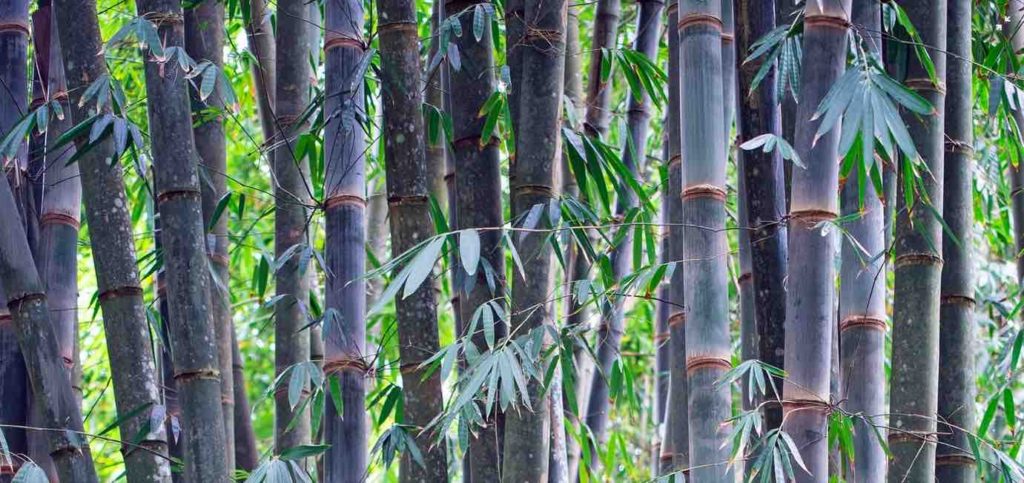
Adaptability: bend like bamboo
Continuously pushing you out of your comfort zone, travel forces you to adapt. To survive and thrive in life (traveling or not), you have to go with the flow and be flexible. When there is a transportation strike, you have to reassess how to get to your destination or change your plans for the day. When you don’t speak a language or aren’t fluent, you figure out how to communicate using what you know.
Years ago, I was forced to check my carry-on luggage at the gate and then the airline lost my luggage. By the time they delivered my luggage three days later, I had adapted to needing less stuff and feeling lighter. Nowadays, I usually take carry-on luggage that is small enough to fit under the seat.
Traveling provides opportunities for flexing your creative problem-solving muscles, and after resourcefully overcoming challenges, you feel a sense of accomplishment and a boost to your self-esteem. Adaptability also makes you feel more comfortable and agile in maneuvering through uncertainty.
Gratitude: seeing with fresh eyes
Gratitude increases happiness. When you travel, not only do inspiring sights and experiences promote gratitude, you can also cultivate gratitude by seeing things through a different perspective.
When I visited Cuba, I was struck by how the grocery store had only one type, brand, and size of cooking oil that filled the shelves from floor to ceiling and halfway down the aisle. The other half of the aisle was bare. Compare that to what we have in the U.S.—a grand assortment of oils, from safflower to coconut oil, a multitude of competing brands, and a choice of sizes. In certain gourmet markets, there are over 30 brands of extra virgin olive oil alone!
Travel changes more than your location
Travel will push you out of your comfort zone. Depending on where you are in your personal development or stage of life, you can take part in as many opportunities for growth as are appropriate for you. Whether you’re taking a trip halfway around the world or staying put and finding yourself internally through meditation, remember philosopher Lao Tzu’s advice, “A journey of a thousand miles begins with a single step.”
Whether we're learning a language, navigating a different culture, or adapting to life's uncertainties, understanding context and seeing connections matter more than memorizing rules.
For me, this isn't just useful when traveling—it's the way I look at the world, and the common thread that runs through my work in the seemingly unrelated fields of English communication and lifestyle health.